

What if the solution to your persistent eczema flare-up didn't involve a three-month wait for a specialist appointment? It's incredibly frustrating to spend your nights scratching instead of sleeping, particularly whilst you're caught in a cycle of trial and error with over-the-counter creams that rarely deliver results. You deserve a clear path to relief that doesn't require navigating endless waiting lists or confusing medical jargon.
This guide provides a step-by-step framework to help you identify environmental triggers, restore your skin’s protective barrier, and effectively manage inflammation. We'll outline a professional daily skincare routine and explain how modern virtual support can provide the expert advice and prescriptions you need to calm your skin quickly. From understanding the latest non-steroidal treatments to mastering hydration, you're about to discover how to reclaim your comfort without the logistical friction of traditional care.
Key Takeaways
- Pinpoint environmental triggers like central heating and damp coastal air that compromise your skin's natural barrier.
- Master the "soak and seal" technique to lock in moisture and effectively manage an active eczema flare-up at home.
- Identify the critical red flags that signal a skin infection and require professional medical advice.
- Discover how to bypass long waiting lists by accessing expert guidance and prescriptions through a modern virtual clinic.
Understanding Eczema and Identifying Your Triggers
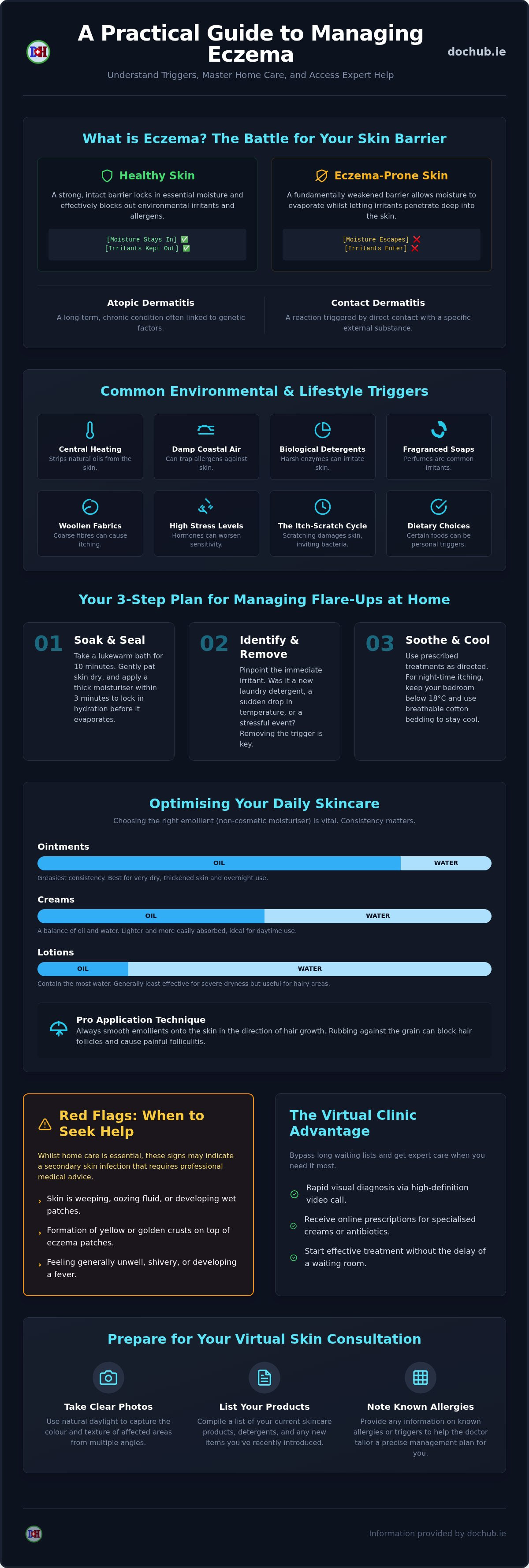
What exactly is eczema? It isn't just a patch of dry skin; it's a chronic condition where your skin's barrier function is fundamentally weakened. This structural compromise allows essential moisture to evaporate whilst letting environmental irritants penetrate deep into the dermis. Most patients experience Atopic dermatitis, which is typically a long-term genetic condition. Conversely, contact dermatitis occurs when the skin reacts to a specific external substance. Distinguishing between these types helps you tailor your treatment effectively.
In Ireland, our local climate presents specific challenges for skin health. The damp coastal air can trap allergens against your skin, whilst the widespread use of central heating during the winter months aggressively strips away natural oils. This dehydration leads to the dreaded eczema "itch-scratch cycle." Every time you scratch, you create tiny tears that invite bacteria in, frequently resulting in secondary infections that make the initial flare-up much harder to resolve.
Common Environmental and Lifestyle Triggers
Your daily environment often harbours hidden irritants that provoke sensitive skin. Biological detergents, fragranced soaps, and even certain woollen fabrics can trigger an immediate inflammatory response. Consider internal factors as well. High stress levels release hormones that can worsen skin sensitivity, whilst certain dietary choices may act as personal triggers. Tracking these observations through a Virtual Clinic Dashboard makes it easier to share an accurate history with a professional and regain control over your skin's health.
A Step-by-Step Guide to Managing Flare-Ups at Home
Managing an active eczema flare-up requires a methodical approach to restore your skin's equilibrium. Start with a "soak and seal" routine. Take a lukewarm bath for ten minutes, then apply a thick moisturiser within three minutes of patting dry. This locks in hydration before it evaporates into the dry air. Simultaneously, identify the immediate trigger. Was it a new laundry detergent or a sharp drop in temperature? Removing the irritant is essential to stop the inflammatory cycle.
For moderate symptoms, apply over-the-counter hydrocortisone or your specifically prescribed Eczema Treatment Options as directed by a healthcare professional. To combat nocturnal itching, keep your bedroom temperature below 18°C and use cotton bedding. A cool environment prevents the heat-induced vasodilation that often triggers scratching during sleep. If your current routine isn't providing relief, you can book a virtual consultation to refine your treatment plan with a specialist.
Optimising Your Daily Skincare Routine
An emollient is a non-cosmetic moisturiser used to replace lost oils in the skin barrier. Choosing the right consistency is vital for comfort. Ointments are greasiest and best for very dry skin, whilst creams are lighter for daytime use. Lotions contain the most water and are generally least effective for severe dryness. When applying these, always smooth them onto the skin in the direction of hair growth. Rubbing them in circles or against the grain can block pores and lead to painful folliculitis.
Knowing When to Seek Professional Help via a Virtual Clinic
How do you know when home management isn't enough? Whilst most cases of eczema respond to a consistent routine, certain red flags indicate a secondary infection that requires medical intervention. If you notice your skin is weeping, developing yellow crusts, or if you feel generally unwell with a fever, it's time to consult a doctor. These symptoms often suggest that the skin barrier is severely compromised, allowing bacteria to take hold. Staying informed through Eczema Treatment Research from the NIAID can help you understand the complexity of these inflammatory responses.
For many, the primary challenge is that they can’t get a GP appointment in Ireland during the most painful phase of a flare-up. This is where DocHub Virtual Clinic provides a vital advantage. Through a high-definition video call, an online GP Ireland can perform a rapid visual diagnosis and discuss your history in detail. If necessary, they can issue a prescription online Ireland for specialised steroid creams or antibiotics. This ensures you start treatment without the delay of a physical waiting room.
Preparing for Your Virtual Skin Consultation
To get the most out of your appointment, preparation is key. Take high-quality, well-lit photos of the affected areas from multiple angles before your call begins. Natural daylight is best for capturing the true colour and texture of the rash. Additionally, compile a list of your current skincare products, detergents, and any known allergies. This information allows the doctor to rule out contact irritants and tailor a management plan that fits your lifestyle perfectly.
Take Control of Your Skin Health
Managing eczema effectively requires a dual approach: identifying environmental triggers that disrupt your skin barrier and maintaining a rigorous daily emollient routine. Whilst home care is the foundation of long-term comfort, professional intervention is vital when inflammation persists or signs of infection appear.
Traditional waiting lists don't have to be your only option. You can consult with experienced doctors directly from your smartphone, ensuring you receive expert advice without the typical delays. Our secure Virtual Clinic Dashboard allows you to track and manage your progress, whilst any required prescriptions are sent directly to your local pharmacy for immediate collection.
Restoring your skin's natural resilience is a manageable journey. With modern digital support and specialist guidance, you can break the flare-up cycle and reclaim the comfort you deserve.
Frequently Asked Questions
Can eczema be cured permanently or only managed?
Eczema is currently a chronic condition with no permanent cure, but it can be managed effectively through trigger avoidance and barrier restoration. Most patients experience periods of remission where the skin appears clear. Long-term success depends on a consistent emollient routine and rapid treatment of flare-ups to prevent the skin from becoming thickened or chronically inflamed.
Is it safe to use steroid creams on my face?
You should only use steroid creams on your face under strict medical supervision. Facial skin is significantly thinner and more sensitive than skin on other areas, making it prone to side effects like thinning or perioral dermatitis. Doctors typically prescribe mild or moderate-strength topical steroids for very short durations to safely resolve facial inflammation without causing long-term damage.
How do I know if my eczema has become infected?
Infected skin usually displays specific warning signs that differ from a standard flare-up. You should look for:
- Weeping, oozing, or honey-coloured crusting.
- Small, fluid-filled blisters.
- Skin that feels hot to the touch or looks increasingly red.
- Swollen glands or a high temperature.
If these symptoms appear, you need professional medical advice to determine if antibiotics are required.
Can I get a sick note for an eczema flare-up through an online GP?
Yes, an online GP can issue a medical certificate if your eczema flare-up prevents you from working. Severe itching can cause significant sleep loss and reduced concentration, whilst infected skin may require rest to heal properly. During your virtual consultation, the doctor will assess your symptoms and provide the necessary documentation to support your recovery period at home.


