

Over 54% of rural patients now wait two days or more just to see a family doctor. If you've spent your morning listening to engaged tones only to encounter closed patient lists, you already know that gp appointment availability ireland has reached an unprecedented bottleneck. Taking hours off work simply to sit in an overcrowded waiting room is frustrating when you need prompt clinical attention.
You shouldn't have to put your life on hold or compromise on medical standards to receive professional healthcare guidance. In this guide, you'll discover why national primary care capacity remains constrained and learn actionable methods to secure faster medical consultations. We'll examine how balancing traditional community clinics with modern digital consultations allows you to bypass scheduling friction and regain complete control over your routine health needs.
Key Takeaways
- Understand the structural factors impacting gp appointment availability ireland and what current wait times mean for your routine healthcare planning.
- Evaluate alternative medical pathways based on consultation speed, clinical scope, and convenience to select the most appropriate care setting.
- Discover how remote video and audio consultations connect you directly with qualified doctors for routine advice without waiting room delays.
- Streamline your treatment process by learning how digital workflows transfer routine prescriptions directly to your preferred community pharmacy.
Understanding GP Appointment Availability Across Ireland
Appointment availability measures the elapsed time between your initial consultation request and actually sitting before a medical practitioner. Within the wider healthcare system in Ireland, this timeline has stretched significantly, leaving many individuals facing unexpected administrative hurdles. While urgent triage protocols reserve same-day slots for acute medical deterioration, routine non-urgent care often involves substantial waiting times. Out-of-hours coverage steps in for evening or weekend emergencies, but general practice clinics handle the bulk of preventative care and routine reviews during standard hours.
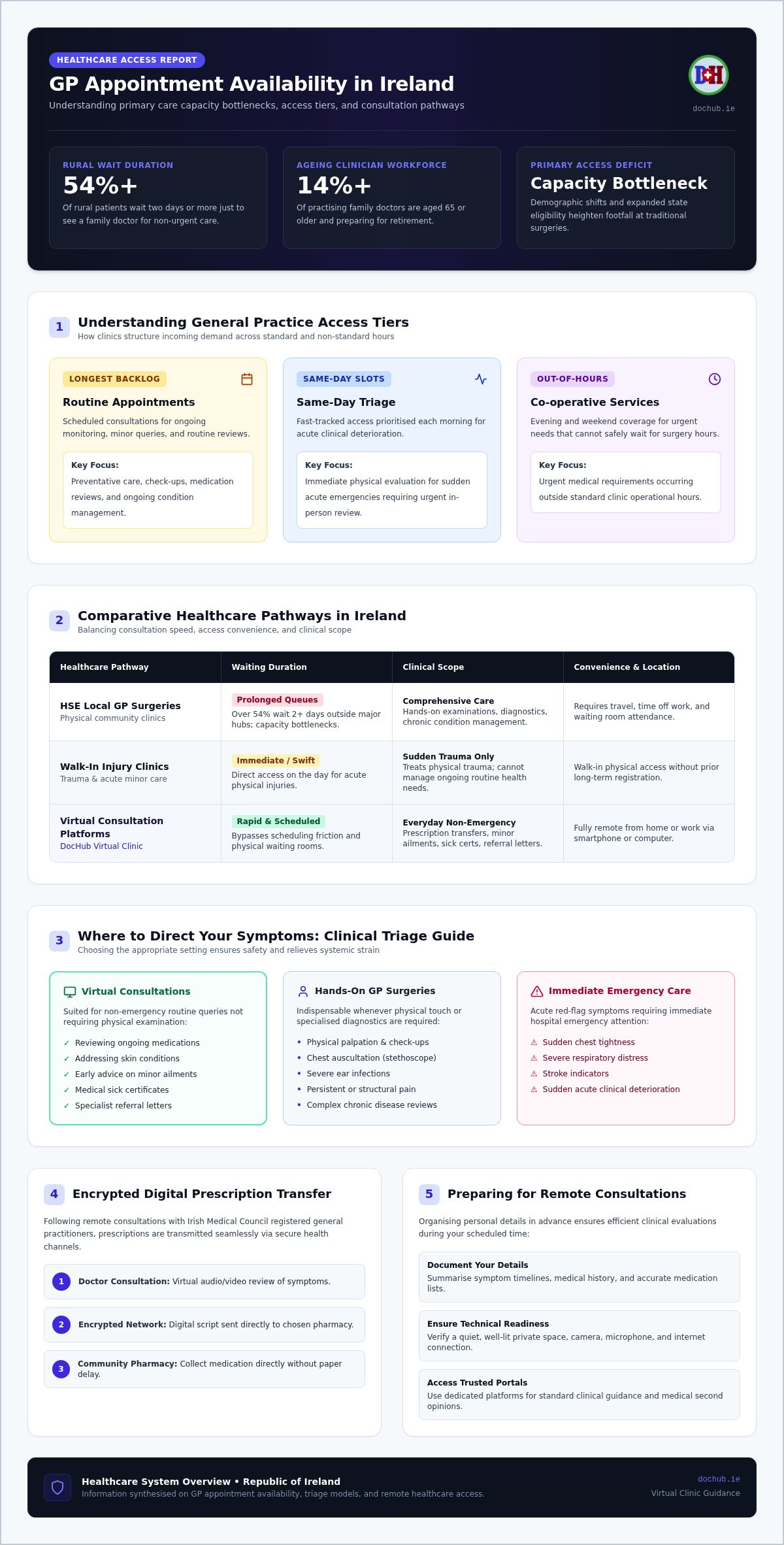
When measuring gp appointment availability ireland, national surveys show that more than half of patients outside major metropolitan hubs wait two days or longer for non-urgent appointments. Understanding these access tiers helps clarify what type of care to request:
- Routine Appointments: Scheduled consultations for ongoing monitoring, minor queries, and prescription management, which routinely carry the longest backlogs.
- Same-Day Triage: Fast-tracked access reserved exclusively for sudden, acute clinical episodes requiring immediate physical evaluation.
- Out-of-Hours Co-operatives: Evening and weekend services intended strictly for urgent medical requirements that cannot safely wait for daytime surgery hours.
Key Pressures Influencing Clinic Waiting Times
Demographic shifts and expanded state eligibility initiatives have dramatically increased patient footfall. With over 14% of practising family doctors aged 65 or older and preparing for retirement, workforce shortages leave fewer clinicians to handle rising demand. Because physical surgeries must prioritise acute emergencies and complex chronic illnesses each morning, non-urgent reviews are naturally deferred. This administrative bottleneck explains why simple check-ups face prolonged queues, prompting many patients to seek alternative pathways for standard clinical advice.
Comparing Pathways for Timely Medical Appointments
Selecting an appropriate healthcare pathway requires balancing three critical factors: waiting duration, access convenience, and clinical scope. Consulting the HSE directory of general practitioners connects you with local surgeries offering comprehensive diagnostic care, though widespread capacity pressures routinely stretch routine appointment timelines. Walk-in injury clinics provide swift relief for sudden physical trauma, yet they cannot manage ongoing health issues. In contrast, scheduled virtual platforms deliver rapid, structured medical advice for non-emergency ailments, completely eliminating the friction of crowded surgery waiting rooms.
Determining the Right Consultation Channel for Your Symptoms
Remote consultations are exceptionally well-suited for everyday, non-emergency medical requirements. You can seamlessly review ongoing medications, address skin conditions, or seek early advice on minor ailments without taking time away from work. Redirecting these routine queries to secure digital channels actively relieves administrative strain on physical practices, supporting broader gp appointment availability ireland for patients who require immediate in-person attention.
Hands-on clinical examinations remain indispensable whenever symptoms require physical palpation, chest auscultation, or specialised diagnostics. Persistent pain, severe ear infections, or structural injuries cannot be safely resolved through a screen. Any acute red-flag symptoms, such as sudden chest tightness, severe respiratory distress, or stroke indicators, demand immediate hospital emergency care. For non-emergency issues that don't require physical touch, you can easily schedule a doctor consultation online to receive reliable clinical guidance from home.
How Virtual Consultations Bridge National Healthcare Delays
Connecting directly with Irish Medical Council registered general practitioners via secure audio or video consultations resolves significant logistical delays. Rather than waiting days or weeks for standard clinical reviews, you can address non-emergency symptoms from any internet-connected smartphone or computer. Following your consultation, practitioners arrange digital prescription transfers directly to your chosen community pharmacy via encrypted health networks. Doctors can also issue legitimate medical sick certificates and specialist referral letters when clinically indicated. By shifting routine queries online, this modern pathway expands overall gp appointment availability ireland, offering vital support when traditional clinics in the HSE Find a GP directory face severe registration caps.
Steps to Prepare for an Efficient Remote Consultation
Careful preparation ensures you maximise your consultation time and receive tailored medical guidance. Taking a few moments to organise your personal information allows the practitioner to evaluate your situation thoroughly:
- Document Your Details: Summarise your symptom timelines, relevant medical history, and an accurate list of any current medications.
- Ensure Technical Readiness: Select a quiet, well-lit private space and confirm that your camera, microphone, and internet connection function properly.
- Use Dedicated Portals: Book consultations and access medical second opinions through trusted platforms like DocHub Virtual Clinic, keeping your digital records organised in one secure place.
These simple steps remove administrative friction, ensuring you don't face unnecessary delays when seeking professional clinical advice.
Securing Timely Healthcare Without the Wait
Navigating constrained gp appointment availability ireland doesn't mean compromising on clinical standards or losing entire mornings in crowded surgery reception areas. Recognising when routine symptoms can be resolved remotely empowers you to bypass administrative queues while preserving physical clinic capacity for patients who require hands-on physical assessments.
Connecting with fully registered Irish Medical Council general practitioners through convenient video and audio appointments provides rapid reassurance from home. With electronic prescriptions transmitted directly to your local pharmacy, continuing your essential medical care remains seamless, structured, and dependable.
Take charge of your health schedule and enjoy the peace of mind that comes with prompt, professional medical attention.
Frequently Asked Questions
Why is it difficult to get a GP appointment in Ireland?
Current gp appointment availability ireland faces significant pressure due to rising demand, expanding public entitlement schemes, and workforce deficits. Surgeries must reserve limited morning slots for acute triage, leaving fewer appointments for routine consultations. As a notable portion of clinicians approaches retirement, existing surgeries nationwide operate at maximum capacity, resulting in extended waiting times for standard appointments.
Can an online doctor in Ireland issue an official prescription?
Yes, an Irish Medical Council registered online doctor can issue valid prescriptions for routine medical conditions. Following your digital consultation, the practitioner transmits the electronic prescription directly to your chosen community pharmacy via secure health networks. While virtual doctors handle many regular medications, they cannot legally prescribe controlled drugs or items requiring physical diagnostics.
What should I do if no GP near me is accepting new patients?
If traditional clinics have closed their patient registration lists, scheduled online GP consultations provide an accessible alternative for routine medical concerns. Digital platforms allow you to consult a registered doctor without being on a physical surgery register. Eligible medical card holders who experience three clinic refusals can also request formal assignment through state primary care services.
Are online GP consultations legally recognised across Ireland?
Online doctor consultations are fully recognised across Ireland when conducted by clinicians registered with the Irish Medical Council. These practitioners adhere to statutory clinical standards and can provide professional medical guidance, second opinions, legitimate sick certificates, and specialist referral letters. They represent a dependable modern solution to navigate constrained gp appointment availability ireland for non-emergency healthcare.


