

What if the subtle tremor or persistent fatigue you've noticed isn't just a sign of ageing, but the first whisper of a manageable neurological condition? It's natural to feel overwhelmed by the ambiguity of early symptoms, especially when faced with the prospect of lengthy neurology waiting lists in Ireland. You deserve clarity and a streamlined path to specialist expertise without the unnecessary stress of the unknown. This guide provides a definitive roadmap for navigating parkinson's disease in 2026, offering you the tools to identify key indicators and understand the Irish healthcare framework. You'll gain a clear understanding of the specific symptoms to monitor, the step-by-step diagnostic process within the HSE, and how modern virtual consultations can provide immediate, high-calibre guidance for your long-term management. Securing an early, expert assessment can significantly reduce anxiety and help you regain control.
Key Takeaways
- Identify the vital motor and non-motor indicators, from tremors to subtle changes in your sense of smell, to ensure early recognition.
- Navigate the Irish diagnostic framework with confidence by understanding the GP's screening role and the subsequent specialist referral process.
- Utilise modern virtual clinic dashboards to streamline your medication reviews and manage the condition with professional guidance from any location.
- Empower your healthcare journey by learning how a medical second opinion provides the clarity needed to confirm a parkinson's disease diagnosis.
Recognising Parkinson's Disease: Early Symptoms and Indicators
Distinguishing between the natural slowing of ageing and the onset of a neurological condition is often the first hurdle for many. Whilst it's common to feel less agile as years pass, this Parkinson's disease overview highlights that specific changes in movement and mood warrant professional attention. Identifying these signs early allows for the implementation of neuroprotective strategies and lifestyle adjustments that can significantly preserve your quality of life.
The Distinction Between Motor and Non-Motor Symptoms
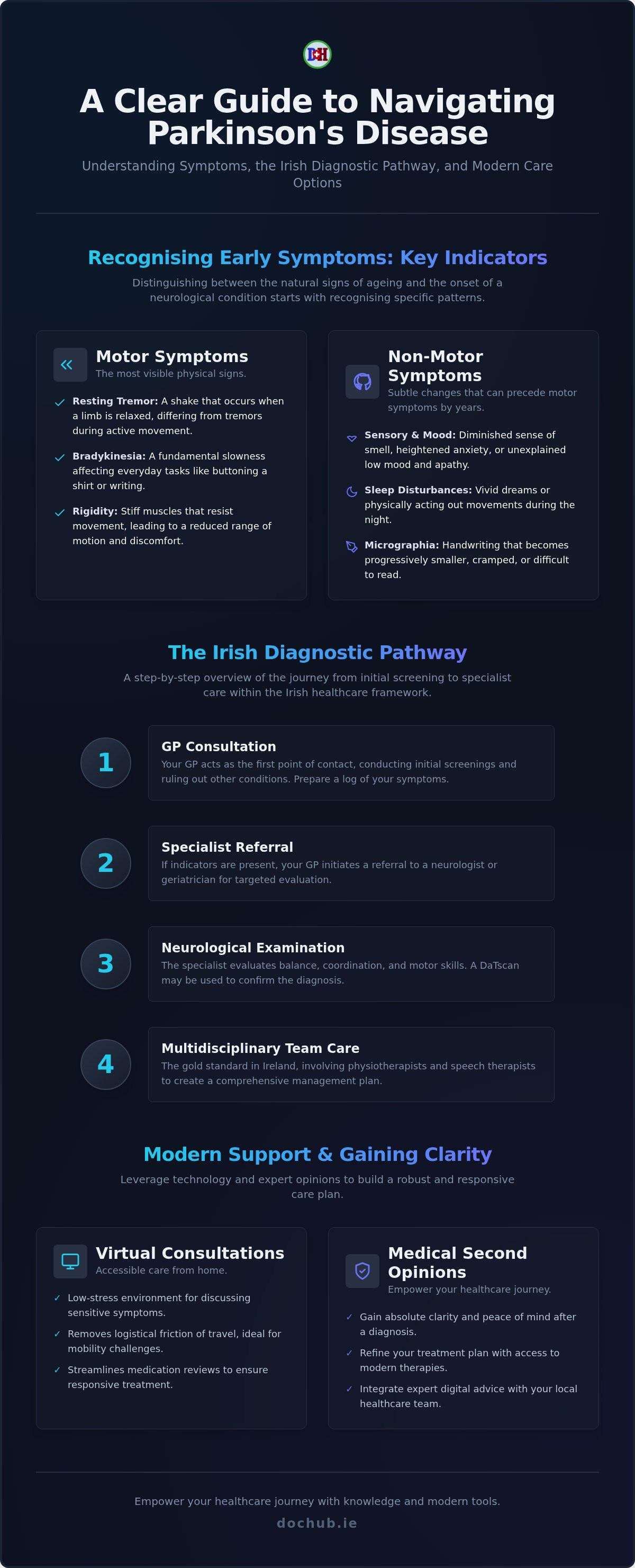
Motor symptoms are the most visible signs, yet they aren't always the first to appear. A resting tremor, which typically occurs when a limb is relaxed rather than in use, is a hallmark of the condition; this differs from an "essential tremor" seen during active movement. Bradykinesia is the fundamental slowness that affects everyday tasks like buttoning a shirt. You might also notice rigidity, where muscles feel stiff and resistant to movement, leading to a reduced range of motion and physical discomfort.
Crucially, non-motor symptoms frequently precede physical tremors by years. Many people report a diminished sense of smell, persistent constipation, or heightened anxiety long before movement becomes a primary concern. Monitoring these indicators is vital for a comprehensive assessment:
- Sleep disturbances: Vivid dreams or physically acting out movements during the night.
- Mood changes: Unexplained periods of low mood, apathy, or social withdrawal.
- Micrographia: Handwriting that becomes progressively smaller, cramped, or difficult to read.
If you're noticing these patterns, booking an online GP consultation can provide a quick, professional screening to determine if a specialist referral is the right next step for your peace of mind.
Navigating the Parkinson's Care Pathway in Ireland
The journey toward a parkinson's disease diagnosis in Ireland begins in your local community. Your GP acts as the essential first point of contact, conducting initial clinical screenings and ruling out other conditions. To make the most of this visit, prepare a detailed log of your symptoms and any relevant family history. This documentation helps your doctor build a clear picture of your experience and ensures no detail is missed during the referral process.
Once your GP identifies potential indicators, they'll initiate a referral to a specialist, typically a neurologist or a geriatrician. This transition marks the move from primary care to a more targeted management plan. If you're unsure where to begin or want to discuss your observations in a discreet setting, starting with a GP online consultation is an efficient way to gain professional advice.
Securing a Specialist Referral
During your neurological examination, the specialist will evaluate your balance, coordination, and motor skills. In some cases, they might order a DaTscan. This specialised imaging technique helps confirm the loss of dopamine-producing cells in the brain, providing an objective measure to support a clinical diagnosis. Managing the transition to specialist care requires patience, but it's the most reliable way to access advanced treatment options.
A multidisciplinary approach is the gold standard in Ireland, involving physiotherapists to maintain mobility and speech therapists to address communication or swallowing challenges. You can also explore Parkinson's Ireland support services for additional community-based resources. For those seeking immediate guidance on your symptoms, you can schedule a consultation with a qualified doctor to discuss your next steps.
Modern Support: The Role of Virtual Clinics and Second Opinions
Adapting to life with parkinson's disease requires a management strategy that prioritises both clinical excellence and personal comfort. Virtual consultations have transformed this experience by providing a low-stress environment where you can discuss sensitive symptoms from the privacy of your home. This modern approach removes the logistical friction of travelling to a physical clinic, which is particularly beneficial for those experiencing mobility challenges or fatigue.
Digital platforms also streamline the essential task of regular medication reviews. Instead of navigating traffic and waiting rooms, you can engage in high-calibre video consultations to monitor your progress and adjust dosages as needed. This efficiency ensures that your treatment remains responsive to your changing needs without the exhaustion often associated with traditional hospital visits. It's a forward-thinking way to maintain control over your long-term health whilst staying connected to expert guidance.
Why a Medical Second Opinion Matters
Gaining absolute clarity after a preliminary diagnosis is vital for your peace of mind. DocHub’s Medical Second Opinion service empowers you to seek validation from highly qualified specialists who can review your case with fresh eyes. This process isn't about questioning your current doctor; it's about refining your treatment plan and ensuring you're accessing the most effective modern therapies available.
Integrating this expert digital advice with your local healthcare team creates a more robust care plan. By combining regional support with global standards of expertise, you're better positioned to manage the condition's progressive nature. This collaborative model ensures that every decision made is backed by thorough validation, giving you the confidence to move forward with a clear and organised strategy for your future care.
Empowering Your Journey Toward Clarity
Identifying early symptoms and understanding the Irish care pathway are the first steps toward reclaiming control. Managing parkinson's disease requires a proactive approach, but it shouldn't be complicated by travel or long delays. By utilising virtual consultations, you can connect with highly qualified, Irish-registered doctors from the comfort of your home. This modern approach ensures your care plan is both precise and accessible, whilst our secure dashboard keeps your health information confidential. Whether you're seeking an initial screening or a medical second opinion to refine your treatment, expert guidance is readily available. You don't have to navigate these changes alone.
Take the next step today to secure the professional support and peace of mind you deserve.
Frequently Asked Questions
Is Parkinson's disease hereditary for most people in Ireland?
Most cases of parkinson's disease in Ireland are not directly hereditary. Research indicates that only about 10 to 15 per cent of individuals have a known family history of the condition. Most diagnoses are considered sporadic, meaning they arise from a complex mix of environmental factors and subtle genetic predispositions rather than a single inherited gene that guarantees the condition's development.
How can an online GP help if I suspect I have Parkinson's?
An online GP acts as a vital entry point for clinical screening and professional guidance. Through a secure video call, a doctor can observe your movements, discuss your history, and evaluate non-motor indicators like mood or sleep changes. This high-calibre assessment helps determine if your symptoms warrant a specialist referral, providing you with a clear and efficient path forward.
What is the difference between Parkinson's and an Essential Tremor?
The timing of the movement is the key differentiator. A tremor associated with parkinson's disease usually occurs at rest and decreases during activity. An essential tremor is typically an action tremor, becoming most apparent when you are using your hands for specific tasks like writing or drinking. Unlike Parkinson's, an essential tremor doesn't usually involve muscle rigidity or slowness of movement.
Can I get a medical certificate or specialist referral through a virtual clinic?
You can certainly obtain a formal specialist referral or a medical certificate following a comprehensive virtual assessment. If your GP identifies symptoms that require the expertise of a neurologist or geriatrician, they will provide the necessary documentation digitally. This ensures your transition into the Irish specialist care pathway is seamless, allowing you to access advanced diagnostic tools without unnecessary delays.
What are the 'red flag' symptoms that require an urgent medical consultation?
Certain symptoms demand immediate attention to ensure your safety and well-being. You should seek an urgent consultation if you experience sudden, severe balance issues leading to falls, significant difficulty swallowing, or the onset of hallucinations. Rapid changes in physical ability or severe reactions to new medications are also critical indicators that your care plan needs an immediate, expert review to prevent complications.


