

Could the most useful first step be a conversation, rather than trying to find the right label? If you’re exhausted, struggling to sleep or finding everyday tasks harder, you may not know whether it’s stress, burnout or another health concern. Arranging an appointment can feel like one more thing to manage, so seeking stress and burnout medical advice online may be a practical way to discuss your concerns with a qualified GP. It isn’t a shortcut to a burnout diagnosis.
It’s understandable to worry you won’t know what to say or won’t be taken seriously. An online GP can listen, assess the information you share and discuss appropriate next steps, though they may recommend care beyond an online consultation. This guide explains when to seek professional advice, what an online GP consultation can and can’t do, and how to prepare so you can make the most of the conversation.
Key Takeaways
- Notice when changes in your wellbeing or daily life make it sensible to seek professional advice. You don’t need to diagnose yourself from a checklist.
- Understand how stress and burnout medical advice online can help you discuss your concerns, and how it differs from self-help or ongoing mental-health support.
- Prepare for a more focused conversation by noting when your difficulties began, how they affect you and any relevant health history.
- Think about what support you hope to explore, and be open about pressures at work or home when discussing next steps.
Stress or burnout? Recognise when medical advice may help
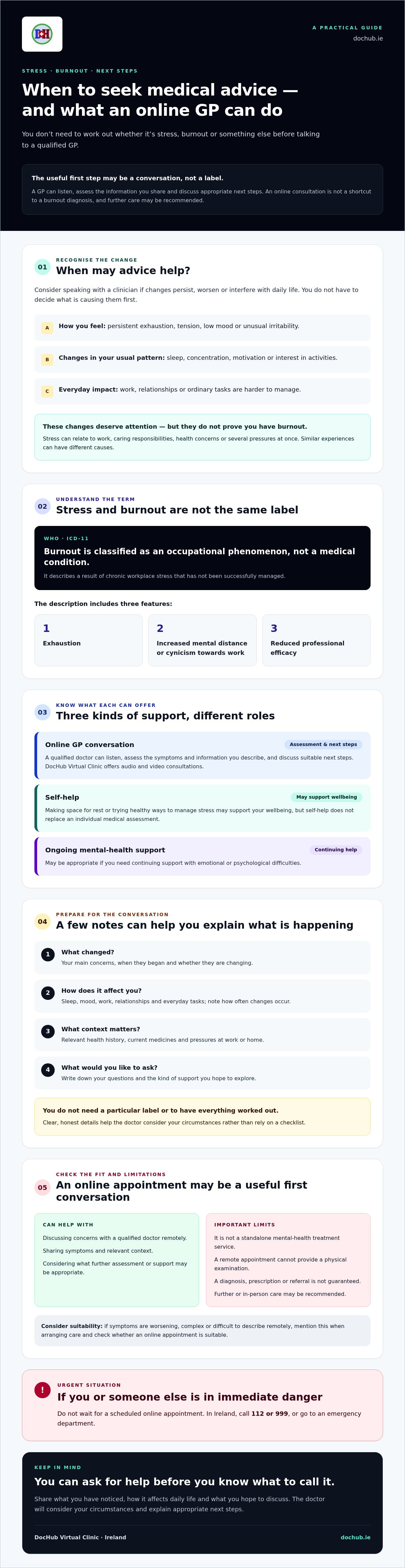
Stress can affect your sleep, mood, concentration and ability to manage everyday responsibilities. These changes deserve attention, but they don’t prove you have burnout. Stress may relate to work, caring responsibilities, health concerns or several pressures at once. Similar experiences can also have different causes.
The World Health Organization classifies burnout in ICD-11 as an occupational phenomenon, not a medical condition. It describes burnout as resulting from chronic workplace stress that hasn’t been successfully managed, with exhaustion, increased mental distance or cynicism towards work, and reduced professional efficacy. The Occupational burnout overview provides further context on this terminology.
Which changes are worth discussing with a GP?
Consider seeking advice if changes persist, worsen or interfere with daily life. You don’t have to decide whether the cause is stress or burnout before speaking to a clinician.
- Feeling persistently exhausted, tense, low or unusually irritable.
- Changes in sleep, concentration, motivation or interest in usual activities.
- Finding it harder to manage work, relationships or everyday tasks.
Before the conversation, note when the changes began, how often they occur and how they affect you. Include changes in sleep or mood, relevant health history, and any pressures at work or home. These details help a GP consider your circumstances rather than rely on a checklist.
Seeking stress and burnout medical advice online can be a convenient way to raise concerns with a qualified doctor. DocHub Virtual Clinic offers audio and video online GP consultations. The doctor can assess the information you share and discuss appropriate next steps. An online conversation may not be suitable for every concern, and further care may be recommended.
What can stress and burnout medical advice online help with?
An online GP conversation, self-help and ongoing mental-health support can each play a different role. A GP can listen to your concerns, assess the symptoms you describe and discuss suitable next steps. Self-help strategies, such as making space for rest or trying healthy ways to manage stress, may support your wellbeing, but they don’t replace an individual medical assessment. Ongoing mental-health support may be appropriate if you need continuing help with emotional or psychological difficulties.
Seeking stress and burnout medical advice online can make it easier to raise a concern remotely, but a consultation isn’t a standalone mental-health treatment service or a guarantee of a particular outcome. The doctor will consider your circumstances and what you report. If an online assessment can’t provide enough information, they may recommend an in-person assessment or other care.
Is an online GP consultation suitable for your concern?
An online consultation may be a useful first conversation if you’re unsure what your symptoms mean or want guidance on what to do next. DocHub Ireland’s Virtual Clinic offers audio and video consultations with qualified doctors. Read more about the online GP consultation and what it involves. If your symptoms are worsening, complex or difficult to describe remotely, mention this when arranging care and check whether an online appointment is suitable.
If a remote conversation feels like a manageable way to start, you can explore an online GP appointment. Explain what you’re experiencing and ask what further assessment or support may be appropriate. An online GP can’t provide a physical examination and may recommend care beyond the consultation.
Prepare for an online GP conversation and choose your next step
A few notes can help you explain what’s happening, especially if you’re worried you won’t know where to begin. Before the appointment, write down:
- Your main concerns, when they started and whether they’re changing.
- How they affect your sleep, mood, work, relationships or everyday tasks.
- Relevant health history, current medicines and questions you’d like answered.
Be open about pressures at work or home, even if they feel difficult to discuss. You can also say what kind of support you hope to explore. You don’t need to use a particular label or have everything worked out. Clear, honest details give the doctor a better basis for considering your situation during a conversation about stress and burnout medical advice online.
If you or someone else is in immediate danger, don’t wait for a scheduled online appointment. In Ireland, call 112 or 999, or go to an emergency department.
What happens after you share your concerns?
The doctor will discuss the information you provide and consider appropriate next steps. Depending on your circumstances, they may recommend care beyond the online consultation. A diagnosis, prescription or referral isn’t guaranteed. Any recommendation depends on clinical assessment, and a remote appointment may not provide everything needed to assess your concern.
If you’re ready to talk through what you’ve been experiencing, book an online GP appointment.
Take a clear, supported next step
You don’t need to work out whether your experience is stress, burnout or something else before asking for medical advice. If changes in your wellbeing are affecting daily life, an online GP conversation can help you explain your concerns and discuss suitable next steps. It’s a first conversation, not a guaranteed diagnosis or a substitute for care that needs to happen in person.
DocHub Ireland’s Virtual Clinic lets you arrange an appointment remotely with a qualified doctor by audio or video. If stress and burnout medical advice online feels like a manageable place to start, you can choose a consultation format and prepare a few notes about what’s been happening.
Taking a thoughtful step towards support can help you discuss what’s been happening and consider what to do next.
Frequently Asked Questions
Can I speak to a GP online about stress or burnout?
Yes. You can raise concerns about stress, burnout or related symptoms in an online GP consultation. DocHub Ireland offers remote audio or video appointments with qualified doctors, so you can discuss what you’re experiencing and consider appropriate next steps. An online appointment isn’t emergency care, and some concerns may need assessment beyond what can be done remotely.
Can an online GP diagnose burnout?
An online GP can discuss your reported symptoms and assess your situation, but a burnout diagnosis isn’t guaranteed. The World Health Organization classifies burnout in ICD-11 as an occupational phenomenon, not a medical condition, linked to chronic workplace stress that hasn’t been successfully managed. A doctor may also consider other possible explanations for your symptoms and recommend further assessment if needed.
What should I tell a doctor about stress or burnout?
Explain what has changed, when it began and how it affects your daily life. Mention sleep, mood, concentration, pressures at work or home, relevant health history and any medicines you take. It can help to write down questions beforehand, including what support you hope to explore. You don’t need to know whether the right term is stress or burnout.
What if I need urgent help rather than an online appointment?
If you or someone else is in immediate danger, don’t wait for a scheduled online appointment. In Ireland, call 112 or 999, or go to an emergency department. An online GP consultation isn’t an emergency service. If the situation feels urgent but there’s no immediate danger, contact your GP or an appropriate urgent health service for guidance on what to do next.


