

Is that sharp, sudden pain beneath your ribs just a passing case of indigestion, or is it your body's way of signalling that you might be developing gallstones? It's incredibly stressful to live with unexplained abdominal discomfort, especially when securing a prompt GP appointment in Ireland often feels like an uphill struggle. You're likely feeling anxious about what these symptoms mean and whether surgery is your only path forward.
This guide provides a comprehensive checklist to help you identify if gallbladder issues are the likely culprit and offers a clear route toward professional clarity. We'll explore the specific indicators of distress, show you how to organise your symptoms for a clinical review, and explain how an expert medical second opinion from DocHub Ireland provides the peace of mind you need before committing to any procedure.
Key Takeaways
- Learn to distinguish between "silent" gallstones and symptomatic blockages to better understand the source of your abdominal discomfort.
- Use our structured 10-point checklist to organise your symptoms, ensuring your doctor has all the necessary information for a precise diagnosis.
- Discover how to access a virtual GP consultation from home, removing the logistical friction of traditional clinic visits while receiving expert care.
- Gain confidence in your treatment plan by seeking a medical second opinion, especially when faced with the prospect of gallbladder surgery.
Understanding Gallstones: Is Your Discomfort a Gallbladder Issue?
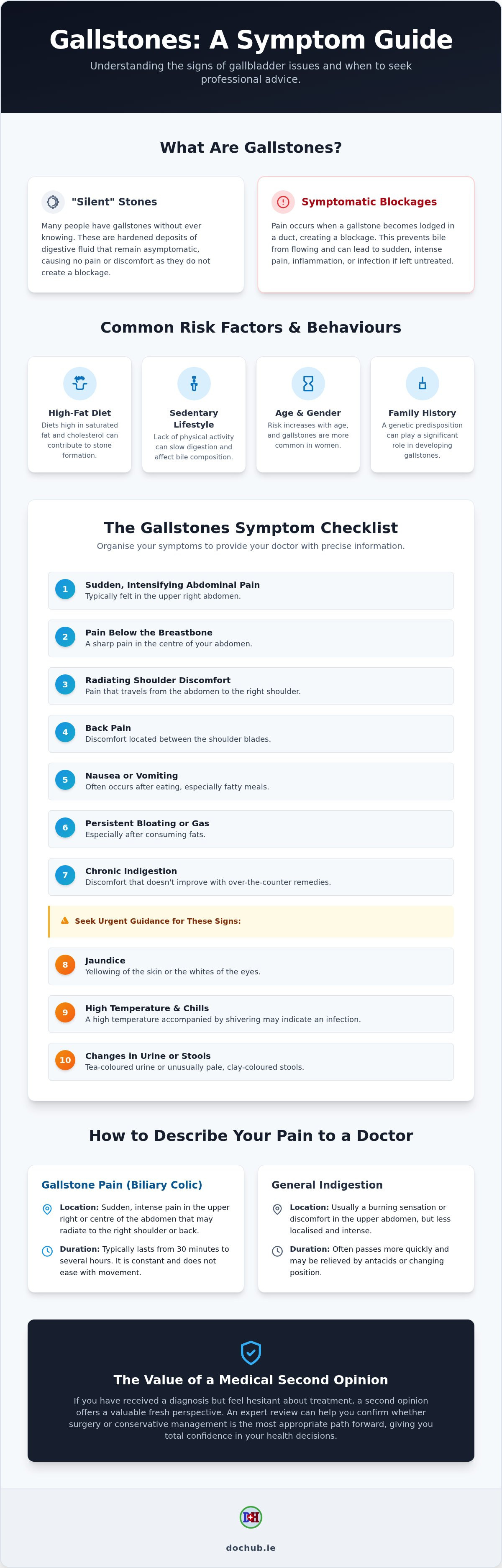
Gallstones are hardened deposits of digestive fluid, frequently composed of cholesterol, that crystallise within the gallbladder over the course of time. For many, these stones remain asymptomatic and are often referred to as 'silent' stones. However, when a stone becomes lodged in a duct and causes a blockage, it can lead to significant pain and potential inflammation or infection. Gaining a deeper level of Understanding Gallstones is essential for long-term health, as untreated blockages can lead to more serious complications like cholecystitis or chronic gallbladder disease.
If you're feeling uncertain about a recent diagnosis or persistent symptoms, securing a medical second opinion through DocHub Ireland allows you to confirm the next steps with total confidence, ensuring that surgery is only pursued when it's clinically necessary. This professional clarity removes the logistical friction of traditional healthcare appointments, putting you back in complete and total control of your own well-being.
Common Risk Factors and Behaviours
Your risk profile is shaped by lifestyle and biological factors. Diets high in saturated fat and sedentary routines contribute to stone formation. Whilst age and family history are unchangeable, many triggers can be managed through expert advice. Biliary colic is the primary intense pain experienced when the gallbladder attempts to expel bile past a stone obstructing the bile duct. Early recognition ensures you access professional care before a minor issue becomes a serious and painful emergency.
The Gallstones Symptom Checklist: 10 Key Signs to Organise
Preparing a detailed record of your physical experiences ensures a more efficient GP consultation. By using The Gallstones Symptom Checklist, you provide your clinician with the precise data needed to distinguish gallstones from general gastric upset. Whilst many people live with asymptomatic stones, those experiencing the signs below should seek professional guidance:
- Sudden, intensifying pain in the upper right abdomen.
- Pain in the centre of the abdomen, just below the breastbone.
- Discomfort radiating to the right shoulder.
- Back pain between the shoulder blades.
- Nausea or vomiting following a meal.
- Persistent bloating or flatulence, particularly after consuming fats.
- Indigestion that fails to improve with over-the-counter medicine.
- Yellowing of the skin or whites of the eyes (jaundice).
- High temperature accompanied by shivering or chills.
- Tea-coloured urine or unusually pale, clay-coloured stools.
Tracking these indicators helps you regain a sense of control over your health. If you identify with several of these points, you can schedule a consultation to discuss your concerns with a highly qualified specialist from the comfort of your home.
How to Describe Your Pain to a Doctor
Precision is vital when discussing your symptoms during a remote assessment. Identify whether the centre of your discomfort stays localised or moves toward your shoulder. Note the duration of these 'attacks'; gallstone pain typically lasts from thirty minutes to several hours, whilst indigestion often passes more quickly. Understanding these nuances helps your doctor form an accurate picture. If you're curious about how these details are evaluated digitally, our Virtual Clinic Ireland guide offers further context on modern healthcare standards.
Taking Action: Preparing for Your Virtual GP Consultation
How can you ensure your upcoming medical discussion is as effective as possible? Before you book an online GP consultation, take a moment to organise your notes using the checklist provided in the previous section. Ensuring your symptom log is ready allows our doctors to assess your situation with clinical precision, ensuring that no detail is overlooked during your review. This preparation empowers you to lead the conversation and obtain the clear, decisive answers you deserve.
Speaking with a highly qualified doctor from the comfort of your own home provides immediate peace of mind. Whilst traditional Irish healthcare pathways often involve frustrating waiting lists and logistical friction, DocHub Ireland offers a streamlined and modern alternative. You don't need to endure weeks of uncertainty. By choosing a digital-first approach, you gain rapid access to experts who possess a deep understanding of gallstone symptoms and causes. When you are ready to take the next step toward clarity, you can schedule an appointment for a thorough review of your health concerns.
The Value of a Medical Second Opinion Online
Seeking a second opinion is now a standard component of modern healthcare, particularly for chronic conditions like gallstones. If you have already received an initial diagnosis but feel hesitant about the proposed treatment, a virtual review offers a valuable fresh perspective. Our specialists provide an objective analysis of your case, helping you confirm whether surgery or conservative management is the most appropriate path forward. For those currently prescribed treatments, our medication review guide serves as an excellent resource for understanding how to manage symptoms whilst awaiting a definitive plan.
Prioritising Your Digestive Health with Expert Guidance
Identifying the root cause of persistent abdominal pain is the essential first step toward reclaiming your quality of life. By utilising our structured checklist, you've already begun the vital process of organising your symptoms for a professional review. Accuracy matters. Whether you're concerned about "silent" gallstones or experiencing acute discomfort, having a clear record allows your clinician to provide a faster diagnosis. DocHub Ireland removes the logistical friction of traditional clinic visits, giving you direct access to highly qualified, Irish-registered doctors from your home. You can secure an expert medical second opinion without the stress of travel or crowded waiting rooms, ensuring you feel empowered and completely confident in your treatment plan.
Your path to clarity shouldn't be a source of anxiety; our modern approach ensures you receive the guidance you need with the efficiency you deserve.
Frequently Asked Questions
Can gallstones be treated without surgery?
Yes, non-surgical treatments such as bile acid dissolution therapy are available for specific patient groups, though they are often less definitive than surgery. These options are typically reserved for individuals who cannot safely undergo a cholecystectomy. Discussing these alternatives during a medical second opinion helps you understand which clinical pathway is safest and most effective for your unique health profile.
How long does a typical gallbladder attack last?
A typical gallstone attack, often referred to as biliary colic, usually lasts between thirty minutes and several hours before the pain subsides. Unlike common indigestion, which often resolves quickly, this discomfort is sharp and persistent. If the pain lasts longer than six hours or is accompanied by a fever, it may indicate a more serious complication requiring prompt clinical assessment.
Is it possible to have gallstones with no symptoms?
It is very common to have gallstones without experiencing any noticeable symptoms. These are often discovered incidentally during scans for unrelated conditions and typically don't require surgical intervention unless they begin to cause pain or blockages. Monitoring your health and understanding the early warning signs ensures you can seek professional guidance quickly if your status changes from asymptomatic to symptomatic.
What should I eat to avoid triggering gallstone pain whilst waiting for a consultation?
Focus on a low-fat, high-fibre diet to minimise the risk of triggering painful gallbladder contractions whilst you wait for your appointment. Avoiding fried foods, heavy sauces, and fatty meats reduces the demand on your gallbladder to release bile. Opt for smaller, more frequent meals consisting of lean proteins, whole grains, and plenty of vegetables to maintain digestive comfort.


