

What if that persistent redness on your cheeks isn't actually adult acne, but a complex skin condition like rosacea that requires a completely different approach? For many people across Ireland, the frustration of a stinging face and sudden flushing during social events is more than just a cosmetic concern; it's a source of genuine anxiety that standard skincare often makes worse. You've likely felt the sting of a "gentle" moisturiser or wondered why your skin reacts so aggressively to a glass of red wine.
It's exhausting to guess which products will cause a flare-up, but you don't have to manage this alone. This guide will help you recognise specific symptoms, identify your personal triggers, and understand how to access professional medical guidance through modern virtual clinic services. We'll explore effective management strategies and how a virtual GP consultation can provide the clarity you need without the friction of a traditional waiting room.
Key Takeaways
- Differentiate your symptoms from adult acne by recognising the clinical signs of rosacea, such as persistent redness and visible blood vessels.
- Reduce the frequency of flare-ups by understanding how Irish environmental factors like biting winds and indoor heating impact your skin sensitivity.
- Improve skin texture and manage chronic inflammation by exploring the role of prescription-strength topicals and oral treatments.
- Fast-track your path to clarity and relief with a personalised care plan accessed through a modern online GP consultation.
Identifying the Signs: Is it Rosacea or Something Else?
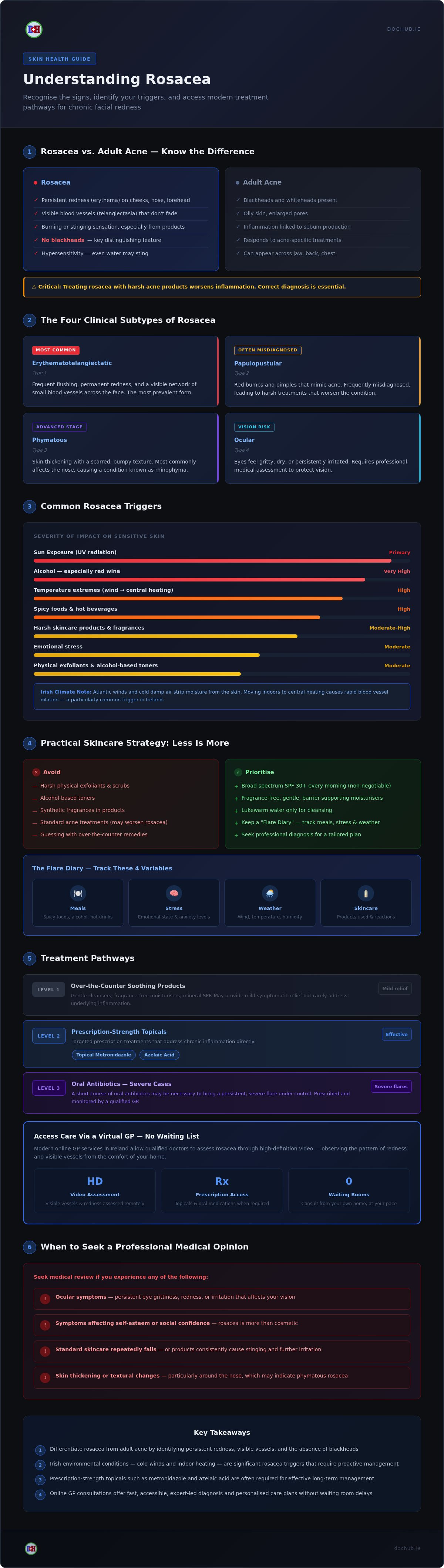
Rosacea is a chronic inflammatory skin condition that primarily targets the central regions of the face, such as the nose, cheeks, and forehead. While it's often dismissed as simple "flushing," it involves persistent erythema (redness) and telangiectasia, which are small, visible blood vessels that don't fade. Distinguishing this from adult acne is vital for correct treatment; whilst acne involves blackheads and oily skin, rosacea typically does not. If your "breakouts" lack blackheads, you're likely dealing with an inflammatory response rather than traditional acne.
The sensory symptoms are often just as impactful as the visible ones. Many patients report an intense stinging or burning sensation, particularly when using standard skincare products or even plain water. This extreme hypersensitivity suggests your skin’s protective barrier is struggling. Recognising these internal sensations helps doctors confirm a diagnosis during an online GP consultation, where you can describe these feelings alongside visual signs.
The Four Main Subtypes of Rosacea
Medical professionals categorise the condition into four distinct subtypes to better tailor management plans. Understanding which type you have is the first step toward reclaiming your skin's health.
- Erythematotelangiectatic: This is the most prevalent version. It's marked by frequent flushing, permanent redness, and a network of visible vessels across the face.
- Papulopustular: This subtype features red bumps and pimples. Because it looks like acne, it's frequently misdiagnosed, leading to the use of harsh treatments that actually worsen the inflammation.
- Phymatous: This causes the skin to thicken and develop a scarred, bumpy texture. It most commonly affects the nose, a condition known as rhinophyma.
- Ocular: Your eyes may feel gritty, dry, or irritated. This requires professional medical assessment to ensure your vision remains protected.
Mastering the Flare: Identifying and Managing Your Triggers
Identifying your personal triggers is the most empowering step you can take in managing rosacea. While the root cause remains a medical mystery, we know that flares are almost always provoked by specific external stimuli. In Ireland, our climate presents a unique challenge. The combination of biting Atlantic winds and damp, cold air often strips the skin's natural moisture. When you step inside to the blast of central heating, your blood vessels dilate rapidly, causing that familiar, painful flush.
Your lifestyle choices also play a decisive role in skin stability. Dietary culprits like spicy foods and piping hot beverages are common offenders, but alcohol, especially red wine, is a frequent catalyst for inflammation. Beyond the kitchen, sun exposure remains the primary trigger reported by patients worldwide. Even during a grey Irish winter, UV rays are potent enough to aggravate sensitive facial tissue, making daily protection a non-negotiable part of your routine.
Practical Steps for Sensitive Skin Care
A "less is more" approach is vital for protecting a compromised skin barrier. You should avoid harsh physical exfoliants, alcohol-heavy toners, and synthetic fragrances that can trigger a stinging reaction. Instead, prioritise a high-quality, broad-spectrum SPF 30+ every morning. To move beyond guesswork, we recommend keeping a "Flare Diary." By tracking your meals, stress levels, and weather conditions alongside skin behaviour, you create a structured framework for identifying patterns. If these patterns remain unclear, you can schedule a consultation to review your diary with a professional doctor who can help refine your management strategy.
Modern Treatment Pathways: Accessing Care via Virtual Clinics
Seeking a formal diagnosis is the essential first step in moving from temporary relief to long-term control. Whilst over-the-counter creams might offer mild soothing, prescription-strength topicals are often required to manage the underlying inflammation of rosacea. Doctors typically prescribe targeted interventions such as topical metronidazole or azelaic acid to reduce redness and bumps. In more severe cases, a short course of oral antibiotics may be necessary to bring a persistent flare under control.
You don't have to wait for months on a traditional physical waiting list to begin your treatment journey. Modern online GP Ireland services allow for clear visual assessments through high-definition video calls. This technology is particularly effective for skin conditions, as a qualified doctor can observe the pattern of redness and visible vessels from the comfort of your home. It’s a streamlined, efficient way to access specialist-led care without the logistical friction of a physical clinic.
When to Seek a Professional Medical Opinion
If your symptoms have started to affect your self-esteem or social confidence, it's time to seek expert guidance. Many patients find that standard skincare simply fails to provide results, which often leads to further irritation. You should prioritise a review if you notice ocular symptoms, such as persistent eye grittiness or redness, as these require medical intervention to protect your vision. You can book an appointment today to discuss a tailored management plan and regain control over your skin health.
Reclaiming Control of Your Skin Health
Empowering yourself with the right knowledge transforms how you manage rosacea on a daily basis. Moving from the frustration of unexplained flushing to a structured routine of trigger avoidance and clinical care provides a clear path toward skin stability. You no longer need to rely on trial and error when expert medical advice is available at your convenience. By leveraging modern digital health tools, you can access specialists who understand the complexities of sensitive skin without the logistical hurdles of travel or long waits. This modern approach ensures that your care is as efficient as it is effective, allowing you to focus on living your life with renewed confidence.
Taking the first step toward professional management is often the most significant. With expert guidance and a personalised strategy, you can successfully navigate your symptoms and achieve the lasting comfort your skin deserves.
Frequently Asked Questions
Can rosacea be cured completely?
Rosacea cannot be cured completely at this time, as it's a chronic inflammatory condition. However, it's entirely possible to manage the symptoms effectively through a combination of trigger avoidance and medical intervention. Many patients achieve long periods of remission where redness and bumps are barely visible. Consistency with your prescribed treatment plan and skincare routine is the key to maintaining clear skin over time.
Is rosacea the same as adult acne?
No, rosacea and adult acne are distinct medical conditions that require different treatment approaches. Whilst both can cause red bumps and pimples, rosacea typically lacks the blackheads or "clogged pores" seen in acne. Additionally, rosacea often involves persistent facial flushing and visible blood vessels, which aren't symptoms of acne. Using harsh acne treatments on sensitive skin can often make inflammation significantly worse.
What is the best way to hide rosacea redness with makeup?
The most effective way to neutralise redness is by using a green-tinted colour corrector before applying foundation. This works because green sits opposite red on the colour wheel, effectively cancelling out the flush. We recommend choosing mineral-based products that are free from fragrances and alcohol. These formulations are less likely to irritate your compromised skin barrier or cause a stinging sensation during application.
Can I get a prescription for rosacea through an online GP consultation?
Yes, you can receive a prescription following a successful online GP consultation if the doctor deems it medically appropriate. High-definition video allows our doctors to visually assess your skin and confirm a diagnosis of rosacea from your home. Once confirmed, they can issue prescriptions for topical treatments like metronidazole or azelaic acid, which you can then collect from your local pharmacy anywhere in Ireland.


