

Why should you spend days on a GP waiting list when the most effective relief for your facial pressure is likely already in your bathroom cabinet or accessible via your smartphone? Finding the right sinusitis treatment ireland shouldn't be a source of stress whilst you're already struggling to breathe. Dealing with persistent facial pain is exhausting, especially when traditional clinics are overstretched and you simply need to know if your infection requires medical intervention.
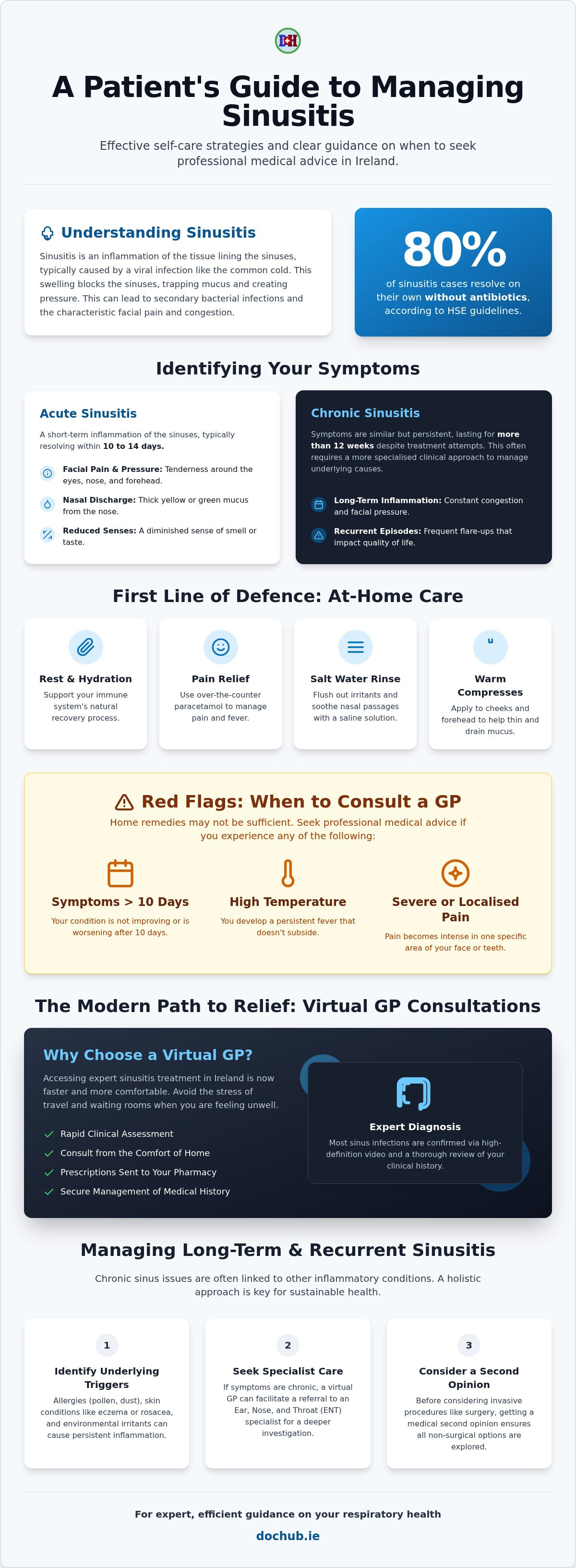
This 2026 guide clarifies how to manage your symptoms at home and identifies when to seek professional help. You'll discover modern self-care strategies, the latest HSE guidelines stating that 80% of cases resolve without antibiotics, and how digital consultations provide a seamless path to clinical clarity. We'll show you how to secure a prescription without the logistical friction of a physical waiting room, ensuring you regain control with expert, efficient guidance.
Key Takeaways
- Identify the hallmark signs of sinus infections and learn the crucial differences between acute and chronic conditions to better manage your recovery.
- Recognise specific "red flag" symptoms that signal a need for professional intervention, such as persistent fever or symptoms lasting beyond ten days.
- Navigate the most efficient pathways for sinusitis treatment ireland by utilising virtual GP consultations for rapid clinical assessment and prescription management.
- Explore the underlying connections between recurrent sinus issues and inflammatory triggers like allergies or skin conditions to ensure long-term respiratory health.
Understanding Sinusitis Symptoms and Essential Self-Care
Sinusitis occurs when the lining of your sinuses becomes inflamed, usually following a viral infection like the common cold. This swelling creates a physical blockage, trapping mucus and preventing natural drainage. When fluid stagnates, it becomes a breeding ground for secondary infections, leading to the characteristic facial pain many experience when seeking Understanding Sinusitis. Identifying these signs early allows you to start effective management before the pressure becomes debilitating.
Most cases are acute, typically resolving within 14 days without antibiotics according to current HSE guidelines. However, if your symptoms persist beyond 12 weeks, it's classified as chronic sinusitis. This distinction is vital for determining the correct sinusitis treatment ireland, as long-term inflammation often requires a more nuanced clinical approach than a sudden flare-up. Use this list to assess your current state:
- Persistent facial tenderness or pressure around the eyes and nose.
- Thick yellow or green nasal discharge.
- A significantly reduced sense of smell or taste.
- A blocked nose that makes breathing difficult.
Effective At-Home Management Techniques
Prioritise rest and hydration to support your immune system's natural recovery process. Over-the-counter paracetamol effectively manages pain and reduces fever whilst your body fights the infection. To clear stubborn congestion, use a salt water nasal rinse. This method flushes out irritants and soothes the nasal lining, providing a drug-free way to reduce swelling. Applying warm compresses amongst the cheekbones and forehead also provides immediate relief by encouraging mucus to thin and drain naturally. These practical steps often form the most efficient first line of sinusitis treatment ireland for mild to moderate cases.
Professional Sinusitis Treatment: When to Consult a GP Online
When do home remedies stop being enough? You should seek professional advice if symptoms persist beyond ten days, if you develop a high temperature, or if your pain becomes severe and localised. These "red flags" suggest that the initial viral infection may have developed into a secondary bacterial issue. An online GP Ireland can accurately diagnose the condition through a thorough clinical history and a visual symptom review. Whilst some believe a physical touch is necessary, most sinus infections are confirmed via patient reporting and high-definition video observation of facial swelling. This modern approach, central to the virtual clinic Ireland model, ensures you receive an expert opinion without the logistical burden of travel.
The Benefits of Virtual Consultations for Sinus Relief
Booking a GP appointment online allows you to avoid busy waiting rooms whilst you're feeling depleted and congested. It's a faster, more comfortable way to access sinusitis treatment ireland from your own environment. During your call, if the GP determines that your infection is bacterial, they can issue prescriptions or medical certificates online directly to your chosen pharmacy. This clinical efficiency is supported by established standards, similar to those found in NHS information on sinusitis. To keep your recovery on track and manage follow-up notes, we recommend you sign up for a secure patient dashboard. This tool organised your medical history, making it easy to monitor your health over time. If you need clarity on your symptoms today, you can book a consultation with a qualified doctor in just a few clicks.
Managing Recurrent Sinusitis and Long-term Respiratory Health
Recurrent sinus issues don't exist in isolation. There is a documented link between chronic sinus inflammation and other systemic inflammatory conditions. Patients managing eczema or rosacea often experience heightened sensitivity in their respiratory tract. Allergies to pollen, dust mites, or pet dander frequently serve as the underlying trigger for persistent swelling. If your symptoms become chronic or unresponsive to standard sinusitis treatment ireland, your virtual GP can facilitate a referral to an Ear, Nose, and Throat (ENT) specialist. This ensures you move beyond temporary relief toward a sustainable management plan.
For those diagnosed with nasal polyps or structural issues, surgery is often suggested as a final resort. Before proceeding with invasive procedures, seeking a medical second opinion provides valuable peace of mind. It allows you to confirm that all non-surgical avenues have been exhausted and that the proposed intervention aligns with the latest clinical standards for 2026. This step is vital for ensuring your long-term health is managed with clinical precision and clarity.
Preventative Strategies for a Healthier Sinus System
Maintaining a healthy sinus system requires proactive environmental control. Use a humidifier to keep indoor air at optimal levels, as dry air can irritate the nasal lining. Avoid common irritants like cigarette smoke or strong perfumes, which can trigger immediate inflammation. Consistency is key. Regular nasal hygiene, such as saline rinses, should be maintained even whilst symptoms are absent to prevent mucus build-up. Finally, schedule a periodic review of your current medications with a doctor to ensure your sinusitis treatment ireland remains effective as your health needs evolve.
Regain Your Clinical Clarity and Breathe Freely
Effectively managing your respiratory health in 2026 relies on a balance of proactive self-care and timely professional guidance. By recognising the early signs of inflammation and implementing consistent nasal hygiene, you can often resolve acute issues before they escalate. However, when symptoms persist, modern digital healthcare provides a streamlined alternative to traditional waiting rooms. Accessing expert sinusitis treatment ireland has never been more efficient, allowing you to confirm your diagnosis and manage your recovery from home.
Our platform connects you with experienced, Irish-registered doctors who can send prescriptions directly to your local pharmacy via a secure virtual clinic. You don't have to endure persistent facial pain whilst waiting for a physical appointment. Clear, specialist advice is available whenever you need to regain control over your sinus health.
Frequently Asked Questions
Do I need antibiotics for sinusitis treatment in Ireland?
Most patients don't require antibiotics for sinusitis treatment ireland. Current 2026 HSE guidelines indicate that 80% of cases are viral and resolve naturally within 14 days. Antibiotics are only prescribed if a GP identifies clear signs of a bacterial infection, such as symptoms lasting longer than ten days or the presence of a high temperature. Focus on saline rinses and rest as your first line of defence.
How long does a typical sinus infection last?
An acute sinus infection typically lasts between two and three weeks. Whilst the most intense pressure usually subsides within 14 days, some residual congestion can linger. If your symptoms don't improve after ten days, it's advisable to consult a professional. Infections that persist for longer than 12 weeks are considered chronic and may require a different clinical management strategy to ensure long-term relief.
Can an online doctor diagnose sinusitis without a physical exam?
Yes, a qualified doctor can accurately diagnose sinusitis via a virtual consultation. Because the diagnosis is largely based on your clinical history and reported symptoms, a physical examination is rarely required for initial assessment. GPs use video calls to observe facial swelling and discuss the nature of your pain, providing a convenient way to access sinusitis treatment ireland without leaving your home.
What is the difference between a cold and a sinus infection?
Whilst both conditions share symptoms, a cold is a viral infection that usually resolves within a week. Sinusitis involves inflammation of the sinus linings, leading to intense facial pressure, thick discoloured mucus, and a diminished sense of smell. If your "cold" symptoms persist for more than ten days or seem to get worse after an initial improvement, you're likely dealing with a sinus infection.


