

Why should your skin's health be held hostage by a six-month waiting list for a specialist? It's incredibly frustrating to cycle through expensive high-street serums only to find your breakouts are just as persistent as before. If you're struggling to find the right acne treatment ireland offers, you aren't alone in feeling overwhelmed by conflicting advice and the logistical friction of traditional healthcare.
You deserve a clear path to confidence that doesn't involve wasting money on ineffective products. This guide provides a definitive management checklist for 2026, designed to help you master your skin health through a structured, evidence-based plan of action. We'll break down the essentials of over-the-counter care, explain how to distinguish between hormonal and bacterial triggers, and outline how modern virtual consultations provide convenient access to prescription-strength solutions when you need them most.
Key Takeaways
- Learn to identify your specific lesion types, from simple comedones to severe cysts, to determine the most effective management strategy for your skin.
- Discover how to utilise your local pharmacist as a first port of call and which active ingredients, such as benzoyl peroxide, are essential for mild cases.
- Identify the critical signs that indicate it is time for professional acne treatment ireland services, such as when over-the-counter products fail after three months.
- Understand how to access expert medical advice and valid prescriptions through virtual consultations, bypassing traditional waiting rooms and long HSE lists.
Understanding Acne Severity: A Self-Assessment Checklist
Acne isn't merely a teenage rite of passage. It's a medical condition affecting the sebaceous glands that persists amongst both teenagers and adults across the country. Identifying your specific type is the essential first step in finding the right acne treatment ireland offers, as a generic approach often leads to wasted time and money.
To build a successful routine, you must distinguish between various lesion types. Comedones, which include blackheads and whiteheads, are the result of clogged pores. When inflammation occurs, you'll see red papules or yellow pustules. For more on the underlying biological causes, this comprehensive guide to acne details how these lesions form and why they require targeted active ingredients.
The psychological impact of skin conditions is a valid and urgent reason to seek professional help early. Persistent breakouts can erode confidence and cause social anxiety; making clear skin a priority for overall mental well-being is essential. It's also vital to recognise that adult acne is frequently hormonal, particularly in women. This requires a specialist perspective rather than a generic high-street product.
Checklist: Identifying Your Acne Type
Use this simple guide to categorise your current skin state. This clarity helps you decide which acne treatment ireland path is your best next step.
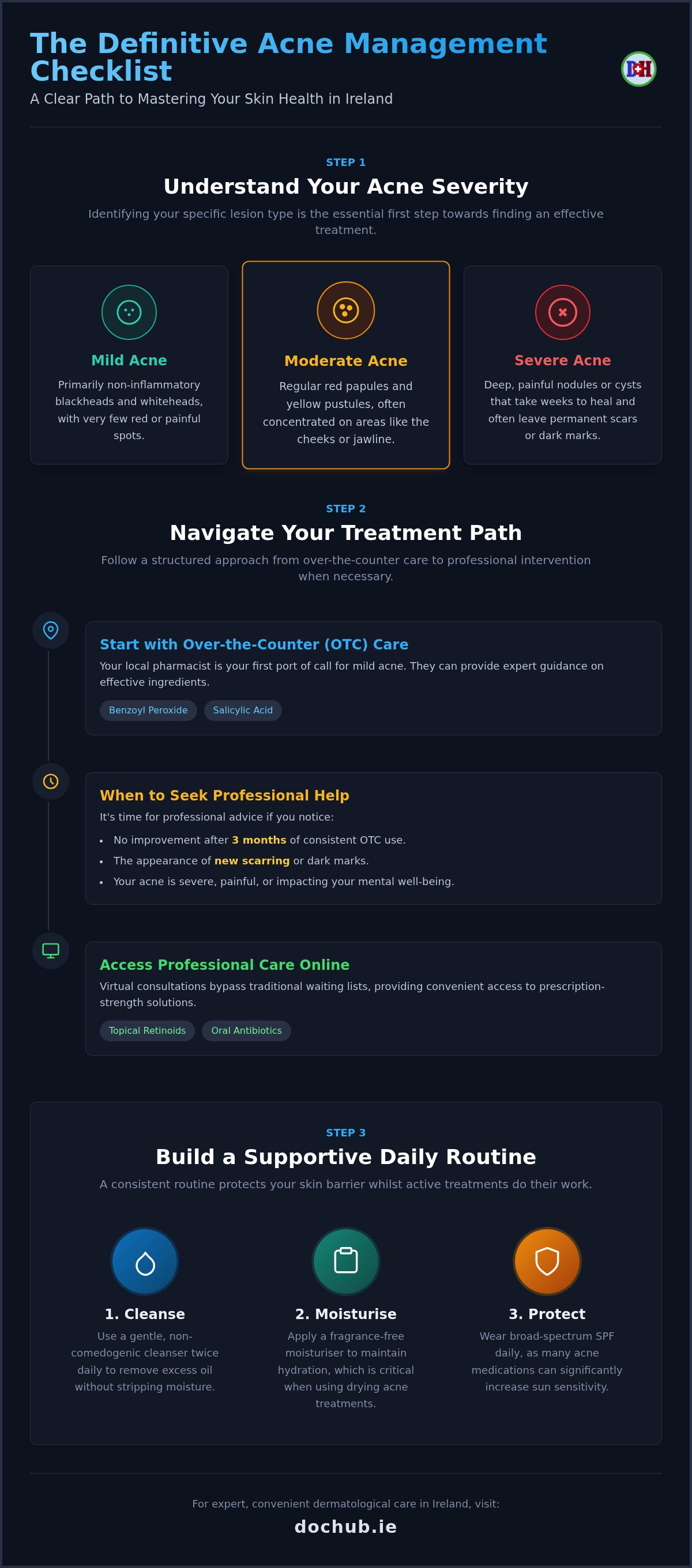
- Mild: Are you primarily seeing non-inflammatory blackheads and whiteheads with very few red or painful spots?
- Moderate: Do you have regular red papules and yellow pustules covering specific areas like the cheeks or jawline?
- Severe: Are you experiencing deep, painful nodules or cysts that take weeks to heal and often leave permanent scars or dark marks?
Navigating Acne Treatment in Ireland: Your Management Checklist
Why struggle with trial and error when expert advice is just around the corner? Your local pharmacist is the most accessible resource when beginning your journey with acne treatment ireland. For mild cases, they provide expert guidance on over-the-counter (OTC) options that target early pore congestion. You'll typically find products containing salicylic acid to exfoliate or benzoyl peroxide to reduce bacteria. For a deeper dive into these initial steps, the Irish Skin Foundation acne information resource offers excellent practical advice on living with breakouts.
Whilst OTC solutions work for many, moderate or severe flare-ups usually require clinical intervention. If your skin isn't responding after twelve weeks, a GP prescription is often the most effective acne treatment ireland provides to prevent long-term scarring. Modern healthcare makes this transition seamless; prescriptions issued by a virtual clinic Ireland platform are legally recognised and accepted at every pharmacy nationwide. This ensures you receive high-caliber care without the delay of traditional waiting lists.
Checklist: Building a Supportive Daily Routine
A structured routine protects your skin barrier whilst active treatments do the heavy lifting. Follow these three essentials to maintain balance:
- Cleansing: Use a gentle, non-comedogenic cleanser twice daily. This removes excess oil without stripping essential moisture.
- Moisturising: Apply a fragrance-free moisturiser. Maintaining hydration is critical when using drying medicinal treatments.
- Protection: Wear a broad-spectrum SPF daily. Many acne medications increase sun sensitivity significantly.
If your current routine isn't delivering the results you expect, you might consider how a professional medical review could help you optimise your skin management plan.
Consulting a Doctor Online: A Checklist for Professional Care
When should you transition from self-management to professional medical intervention? If you've followed a consistent over-the-counter routine for three months with no visible improvement, or if you notice new scarring, it is time to gp online. Seeking early clinical advice is the most effective way to prevent permanent skin damage and secure the right acne treatment ireland offers for your specific skin type.
Virtual consultations eliminate the typical barriers to specialist care. You can bypass long travel times and crowded waiting rooms, instead choosing a time that fits your professional or personal schedule. During these sessions, doctors can prescribe clinical-strength solutions, including oral antibiotics or topical retinoids, whilst adhering to the official HSE acne treatment guidelines. This ensures your care is both modern and medically sound. DocHub Virtual Clinic practitioners also provide expert guidance for other chronic conditions, including eczema and rosacea, ensuring a holistic approach to your dermatological health.
Checklist: Preparing for Your Online Acne Consultation
Maximise the efficiency of your appointment by being organised. A little preparation ensures your doctor has all the information needed to tailor your acne treatment ireland plan.
- Lighting and Photos: Use natural light to capture clear, high-resolution photos of the affected areas from several angles before your call.
- Medical History: Organise a list of every product you've tried previously and any medications you're currently taking.
- Questions: Write down your primary concerns, such as "How long until I see results?" or "What side effects should I expect?"
Empowering Your Path to Clearer Skin
Achieving lasting results begins with identifying your specific acne type and maintaining a disciplined routine. Whilst over-the-counter solutions are a helpful start, professional medical intervention is often the most effective route for persistent cases. By choosing a modern approach to acne treatment ireland, you can bypass traditional waiting lists and access expert care from home.
Our Irish-registered doctors provide secure video or audio consultations. Following your assessment, prescriptions are sent directly to your local pharmacy for immediate collection. You don't have to manage chronic breakouts alone when high-calibre medical support is just a few clicks away.
The journey to skin confidence is now more accessible than ever. Take that first step today and start your personalised plan for a clearer future.
Frequently Asked Questions
Can an online GP in Ireland prescribe acne medication?
Yes, an online GP can prescribe various clinical-strength medications for acne. After a secure video or audio consultation, our Irish-registered doctors can issue prescriptions for topical retinoids or oral antibiotics. These are sent directly to your chosen pharmacy via the HealthMail system, making it a highly efficient way to access acne treatment ireland services without the need for a physical examination.
How long does it take for acne treatments to start working?
You should typically expect to wait between six and twelve weeks before seeing significant improvements in your skin. Most active ingredients require at least two full skin-cell cycles to show visible results. It's essential to remain consistent with your prescribed routine; stopping too early is a common reason why many people believe their initial acne treatment ireland plan has failed.
Is acne treatment covered by the Medical Card or Drugs Payment Scheme in Ireland?
Yes, prescribed medications are generally covered under both the Medical Card (GMS) and the Drugs Payment Scheme (DPS). Once you receive a valid prescription from a GP, you'll only pay the standard prescription levy if you have a Medical Card. For others, the DPS ensures you won't pay more than the current monthly threshold for your family's approved medications at any Irish pharmacy.
What should I do if my acne is causing permanent scarring?
If you notice permanent indentations or pigment changes, you should seek professional medical advice immediately to prevent further damage. Scarring often indicates that your breakouts are inflammatory or deep-seated. A doctor can prescribe potent treatments like topical retinoids to encourage skin repair or provide a medical second opinion to determine if a referral to a specialist dermatologist is required.


